

In the tropics, the hull grows weed fast. A well-prepared haul-out takes only a few days at the yard, and every check ends up in the logbook.
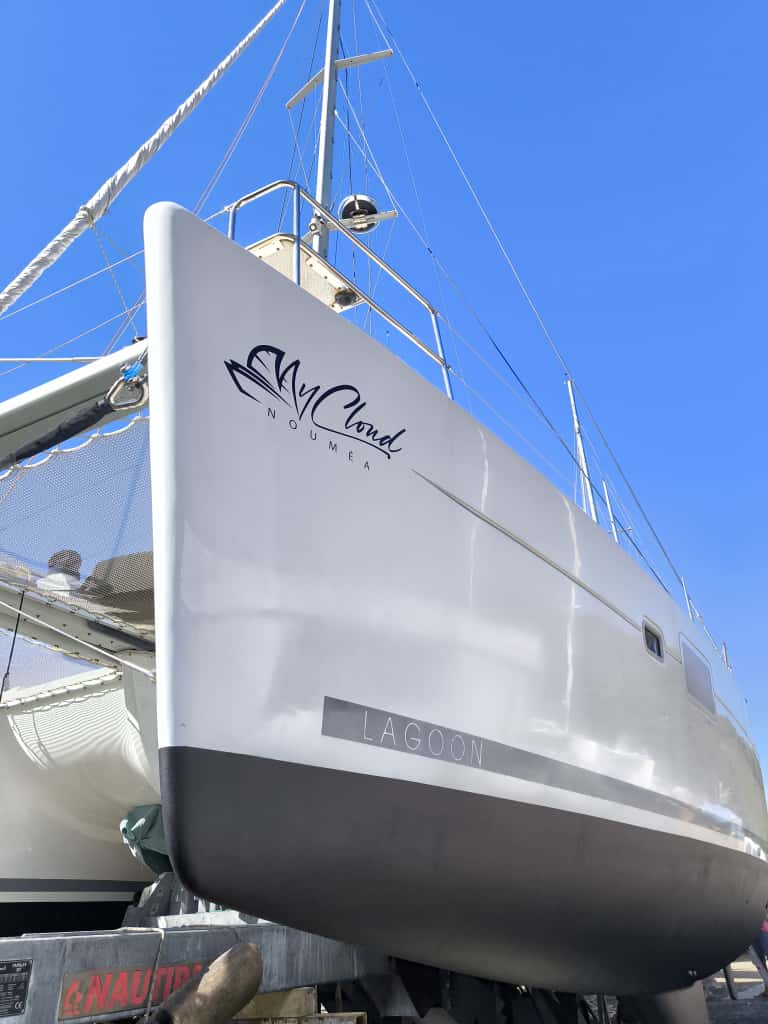
Before hauling out
- Book the lift and the cradle, check the weather for the working days.
- Prepare parts: anodes, seals, products, enough antifouling.
- Read the logbook: last application, number of coats, pending jobs.
The checklist on the hard
Pressure wash as soon as the boat is out, before the growth dries. Then the checks, hull by hull.
- Hull and gelcoat: impacts, blisters, cracks around the bows.
- Saildrives: seals, boots and diaphragms according to the manufacturer’s schedule.
- Propellers and anodes: replace as soon as wear requires.
- Through-hulls and seacocks: operation and watertightness.
- Rudders: bearing play and stock condition.
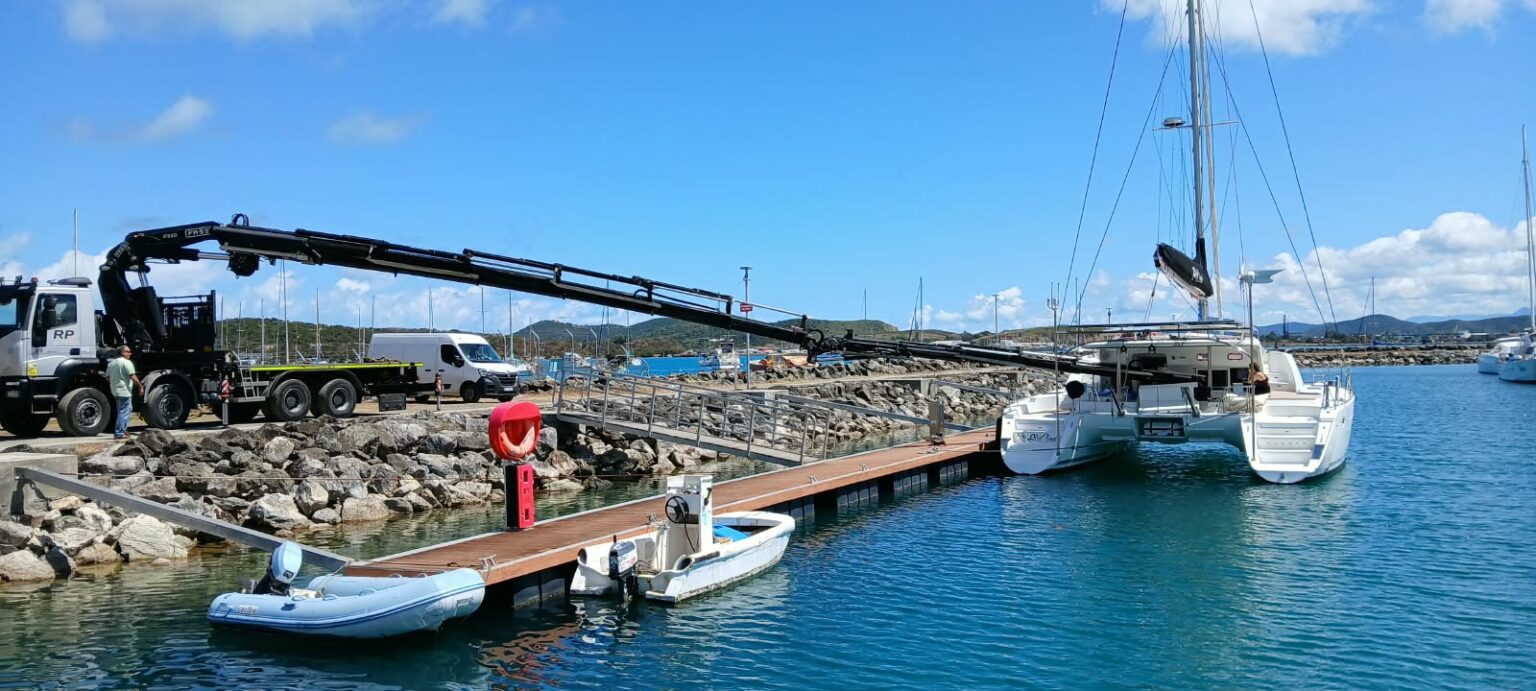
Antifouling and relaunch
Light sanding, primer if needed, then the planned coats, respecting drying times. Before relaunching, check the seacocks and keep an eye on the bilges during the first hours.
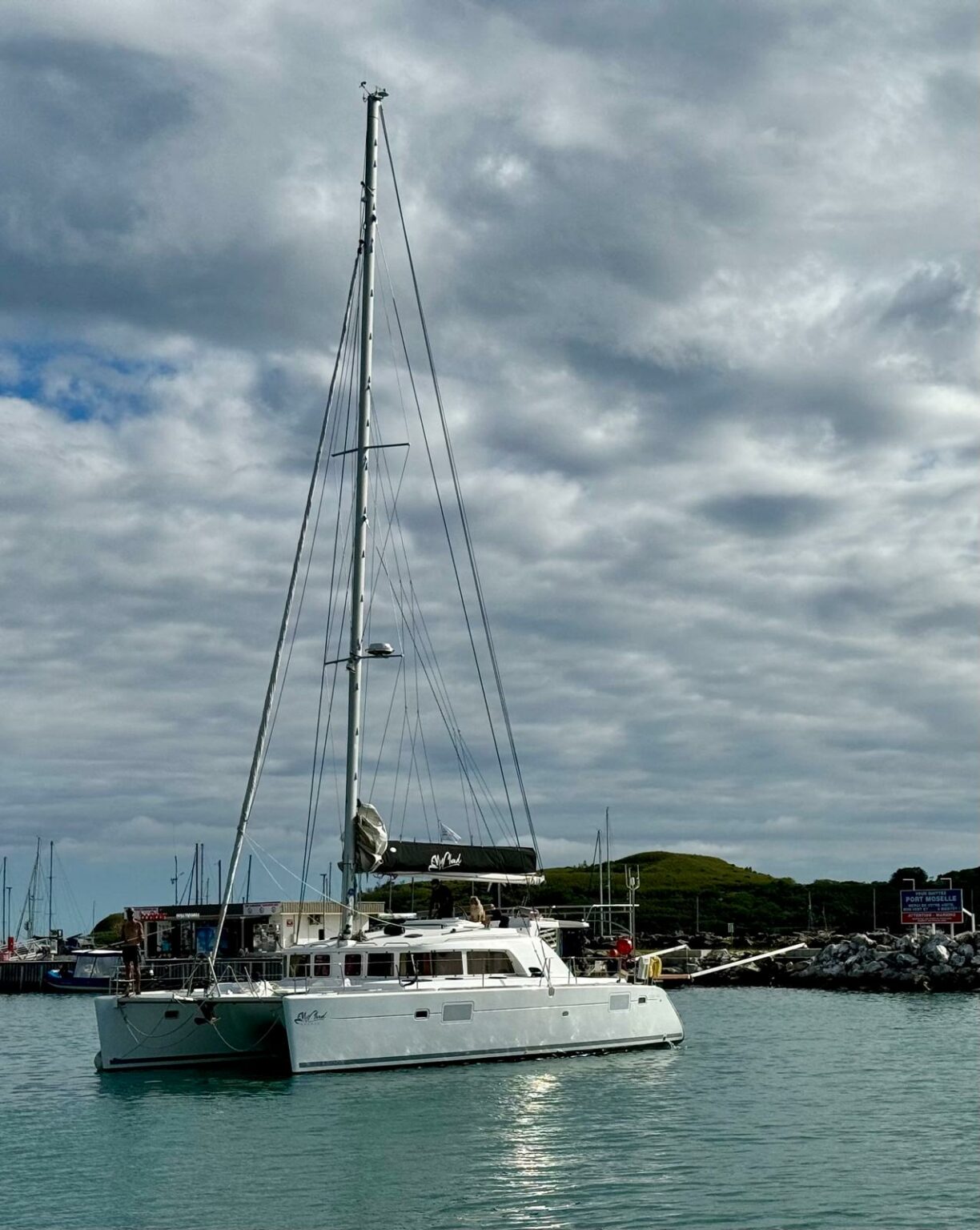
In the logbook. Date, yard, products, number of coats, parts replaced and photos. When selling, this history is worth as much as the antifouling itself.