

A good anchorage is prepared before you arrive. Shelter must fit the wind forecast for the night, not only the afternoon breeze.
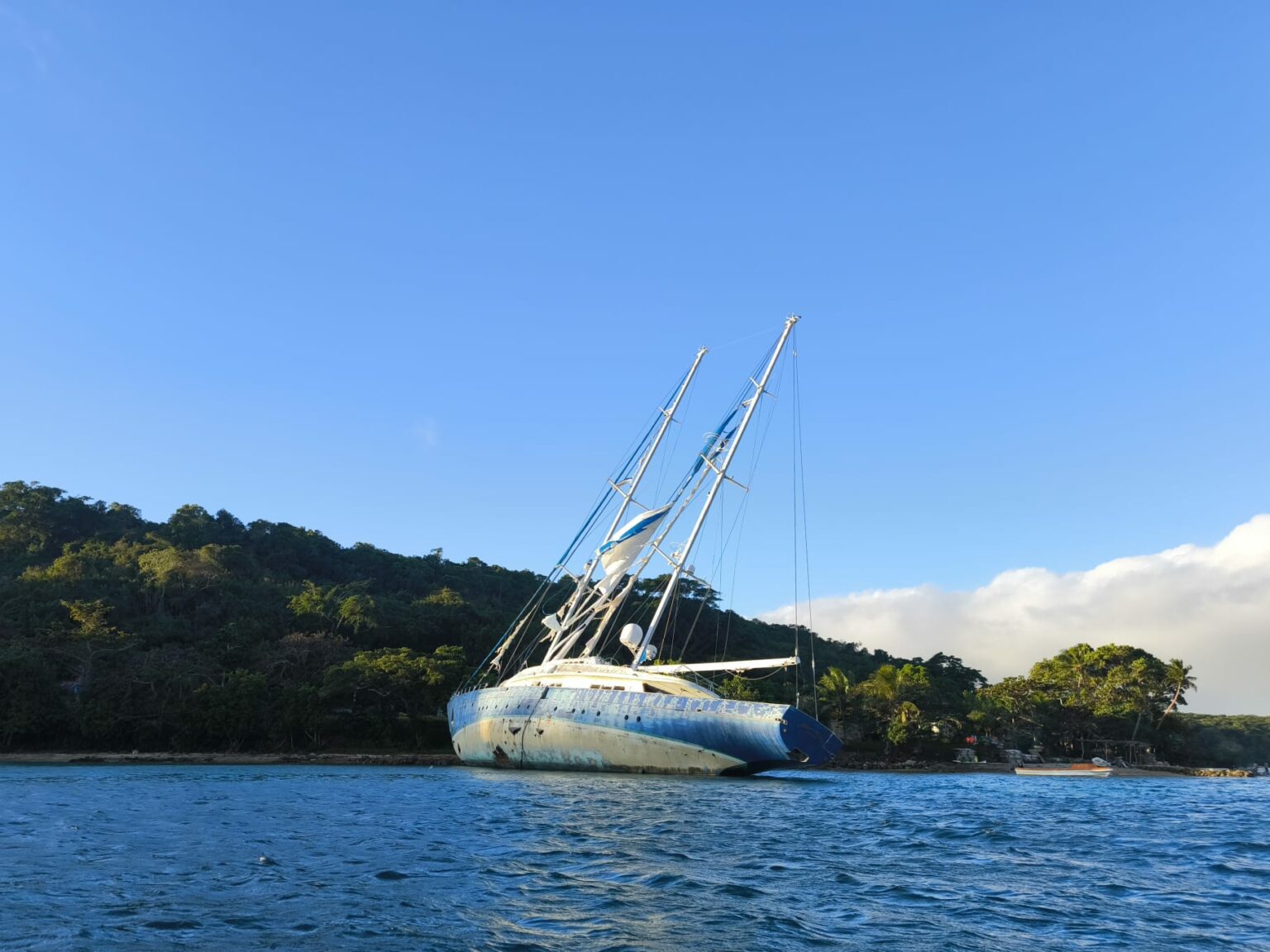
Choosing the shelter
Look at the 24-hour forecast: wind direction, strength and shift, leftover swell. A perfect trade-wind bay can turn into a trap if the wind backs to the west during the night.
Choosing the seabed
Sand and mud hold well. Coral is not something to plough: it deserves protection, and anchors hold poorly in it. Where moorings exist, use them.
Scope and bridle
- In fair weather, at least three times the depth in chain; more as soon as the wind picks up.
- On a catamaran, a bridle to both bows spreads the load and reduces swinging.
- Gentle reverse confirms the anchor has set.
- The swinging circle must stay clear of other boats and shoals.
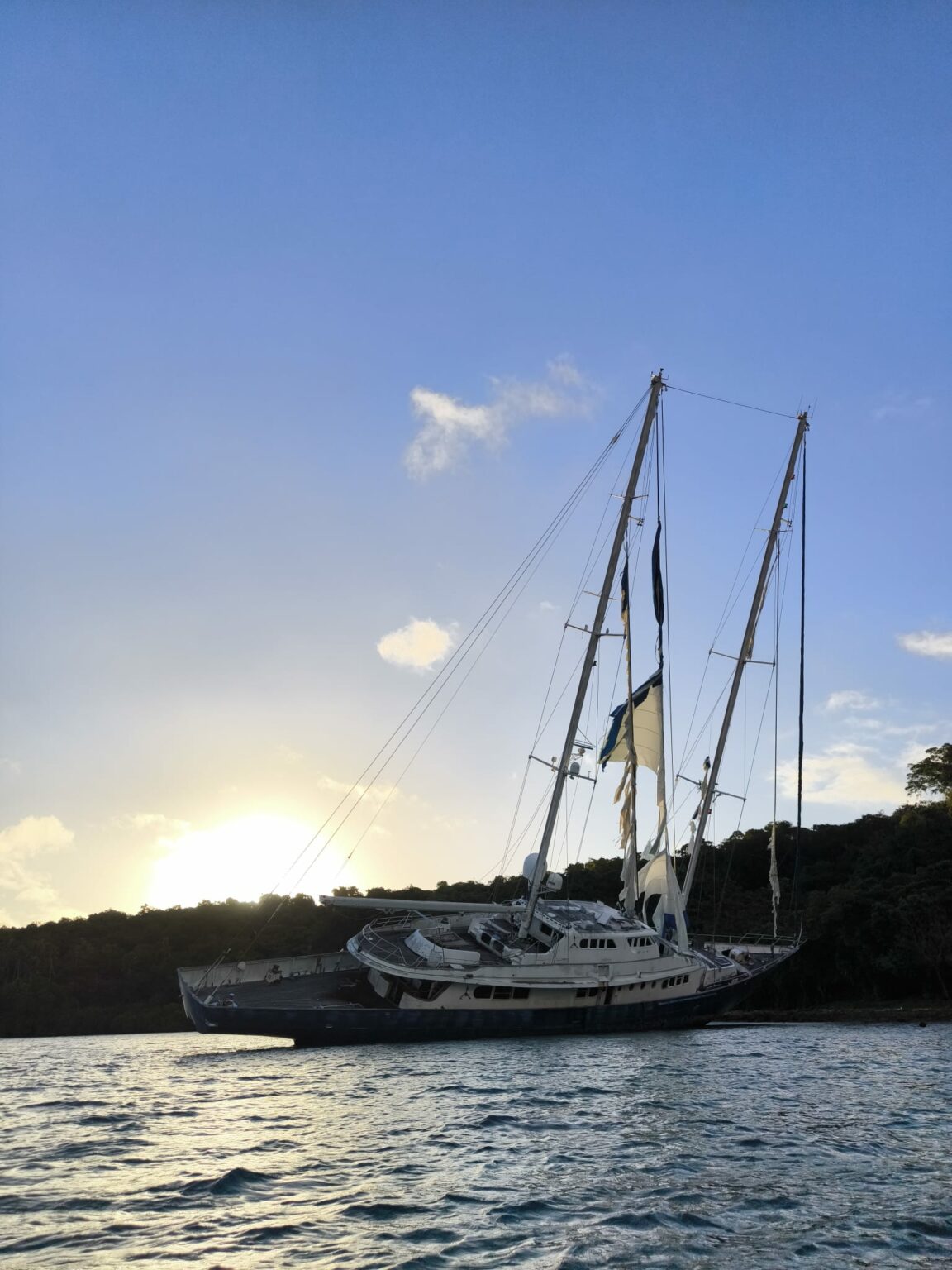
Watching, especially at night
The anchor alarm on the plotter or phone is set before dark. Note one or two landmarks ashore and get up if the wind changes sector. An anchor that holds at 6 pm is not guaranteed at 3 am.
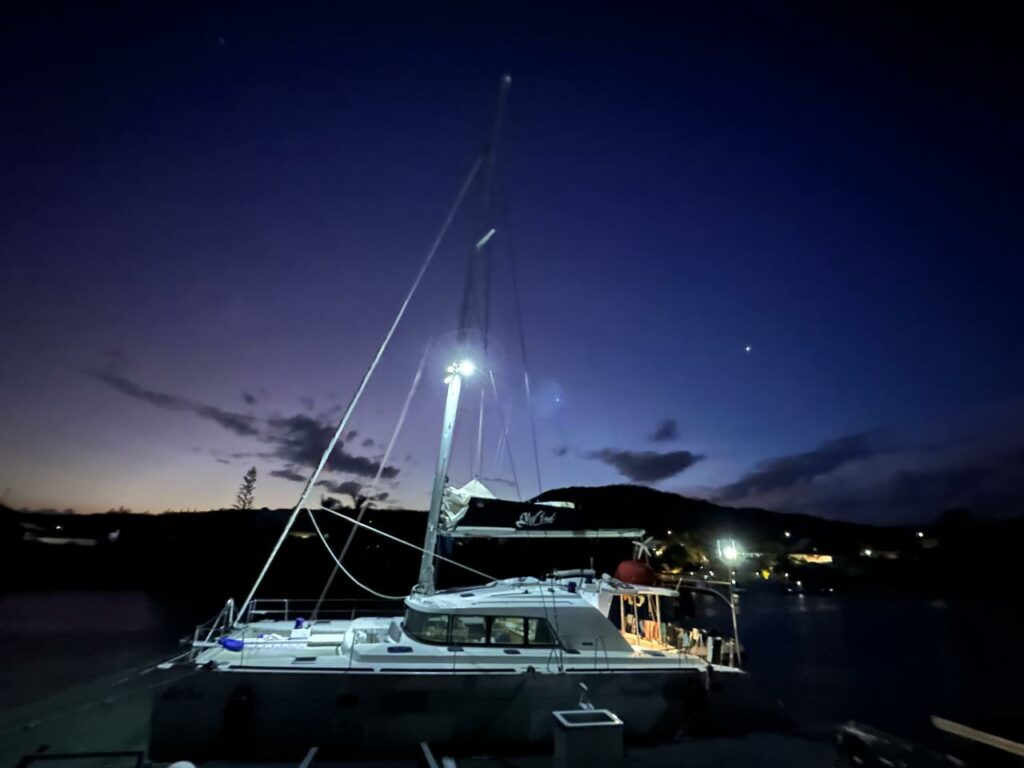
In the logbook. Depth, seabed, scope, forecast and observed wind. These notes help next time, without publishing the place.