

In New Caledonia, a boat’s year is shaped less by spring and autumn than by two broad seasons: the cool season and the cyclone season, from November to April. Fitting your maintenance to that rhythm means doing the heavy work at the right time and going into the southern summer with a boat that is ready.
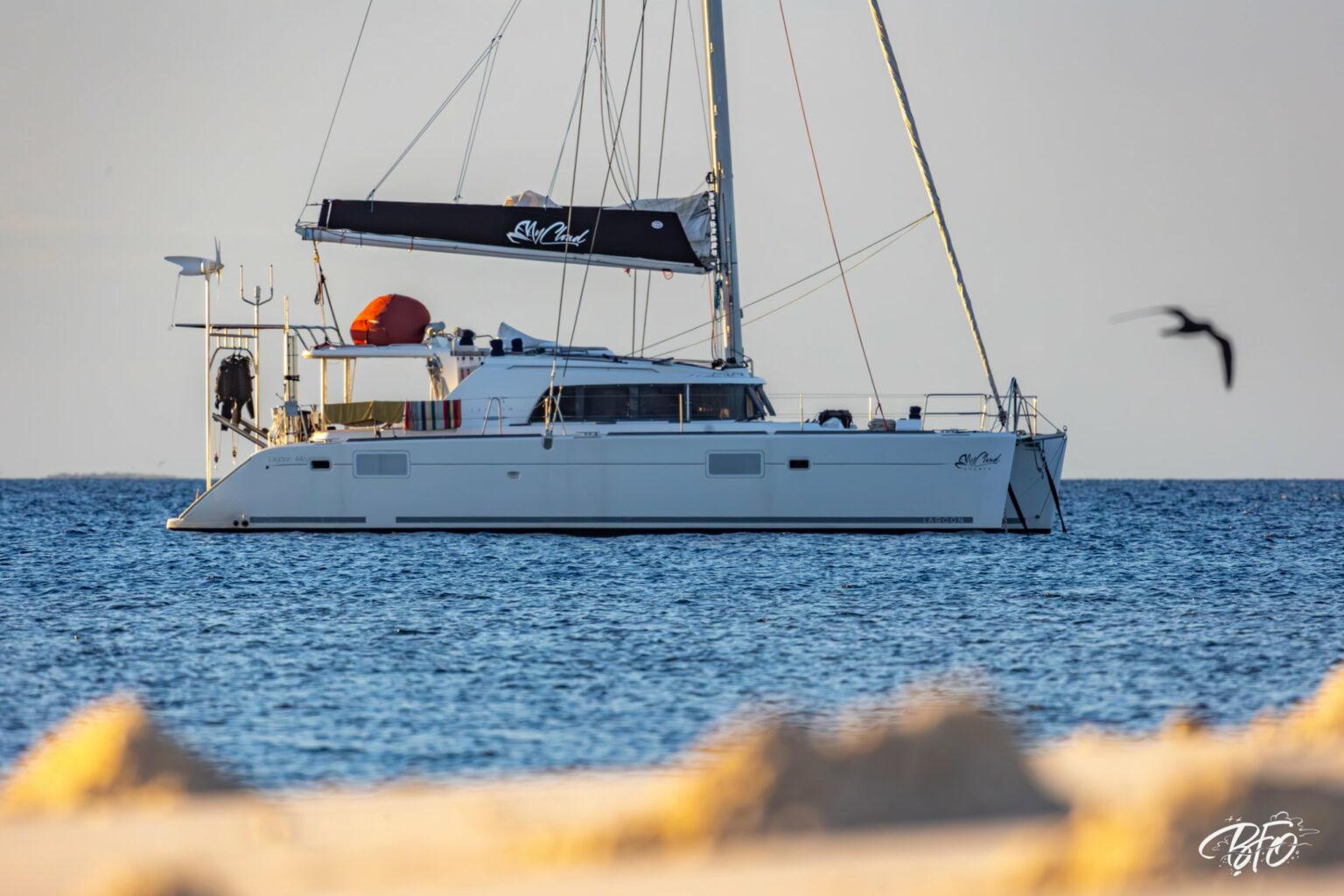
Why a calendar rather than a list
A to-do list without dates always slips. On a catamaran like myCloud there are two engines, two saildrives, a generator, a lithium bank, a tender and its outboard, and safety gear with expiry dates: dozens of deadlines that do not run at the same pace. Some depend on the calendar (insurance, liferaft service, flares), some on running hours (oil changes, filters), others on use (after a passage, after a blow). The annual plan puts all of that on a single timeline.
The cool season: time for yard work
Roughly from mid-May to mid-September, framed by two transition periods, the cool season brings less rain and milder temperatures. The south-east trades remain the norm, with westerly blows as fronts pass through. It is the right time for:
- hauling out and antifouling, booked early because yard slots fill up;
- laminating and painting work, which does not cope well with humid heat;
- redoing deck sealing: stanchion bases, hatches, portlights;
- engine and generator services that keep the boat out of action for several days;
- checking the rig, masthead included.
It is also the sailing season: the Isle of Pines, the southern lagoon, the Loyalty Islands, or further afield, like our two round trips between Noumea and Santo in 2026. So we split the season into three parts: yard work first, sailing next, and a full inspection on return from every long passage. It was in Vanuatu, after all, that we found water getting in through the forward hull-to-deck joint, a problem no theoretical checklist would have revealed.
October transition: getting ready for cyclone season
- Reread the insurance policy, especially the conditions that apply during the cyclone season.
- Settle the cyclone plan: where the boat goes, who looks after it if you are away, what comes off to reduce windage (headsail, bimini, cushions).
- Check mooring lines, cleats, fairleads and fenders, and keep spare lines aboard.
- Test the bilge pumps, their float switches and the alarms.
- Build a stock of common wear parts: filters, impellers, anodes, belts.
Cyclone season: keep watch, keep jobs light
From November to April, heat, humidity and heavy rain dominate, and we follow the bulletins from Météo-France Nouvelle-Calédonie closely. We avoid opening up big jobs that would leave the boat in pieces just when it might need to be prepared in a hurry. The tasks in this period are shorter but more frequent:
- airing the boat and hunting down damp in lockers, bilges and wardrobes;
- checking the bilges after every heavy downpour, which is often when a leak shows itself;
- running the engines and generator regularly;
- cleaning the hulls more often, since growth is fast in warm water;
- keeping an eye on solar charging and battery condition.
What runs on hours, not months
Intervals for oil changes, filter replacement and servicing of the Yanmar 4JH4-AE engines and the Cummins Onan generator are set out in the manufacturers’ manuals, expressed in hours and often with a maximum number of months as well. Whichever threshold comes first triggers the job. An engine that rarely runs still ages: oil, seals and impellers do not like sitting idle. So we note the hour meters every time we come back to port, which lets us order parts before we need them.
Building your plan in an afternoon
- List the equipment zone by zone: hulls, cockpit, technical compartments, deck, mast.
- For each item, note the interval from the manual: a date, a number of hours, or both.
- Spread those deadlines over twelve months with the seasons in mind: heavy work in the cool season, light work during the cyclone season.
- Set reminders early enough to order parts, which can take a while to reach New Caledonia.
- Review the plan at each transition season in light of what actually happened.
That is exactly what scheduled maintenance does in the myCloud boat management app: each task is linked to a piece of equipment and a zone, with reminders at 90, 30 and 7 days and on the day itself, plus a calendar subscription so deadlines show up in your phone’s diary. On myCloud it currently tracks 118 check points. The app needs a connection: at anchor out of coverage, we jot things down on paper and enter them back in range.
In the logbook. After every passage, a full walk-through of the boat, zone by zone, with the engine hours noted. Whatever we find becomes a dated job, not a vague memory.